Zara Lang · 29 September 2026
How Timing Fluctuations in Domain Propagation Affect Crawler Revisit Patterns Across Major Engines
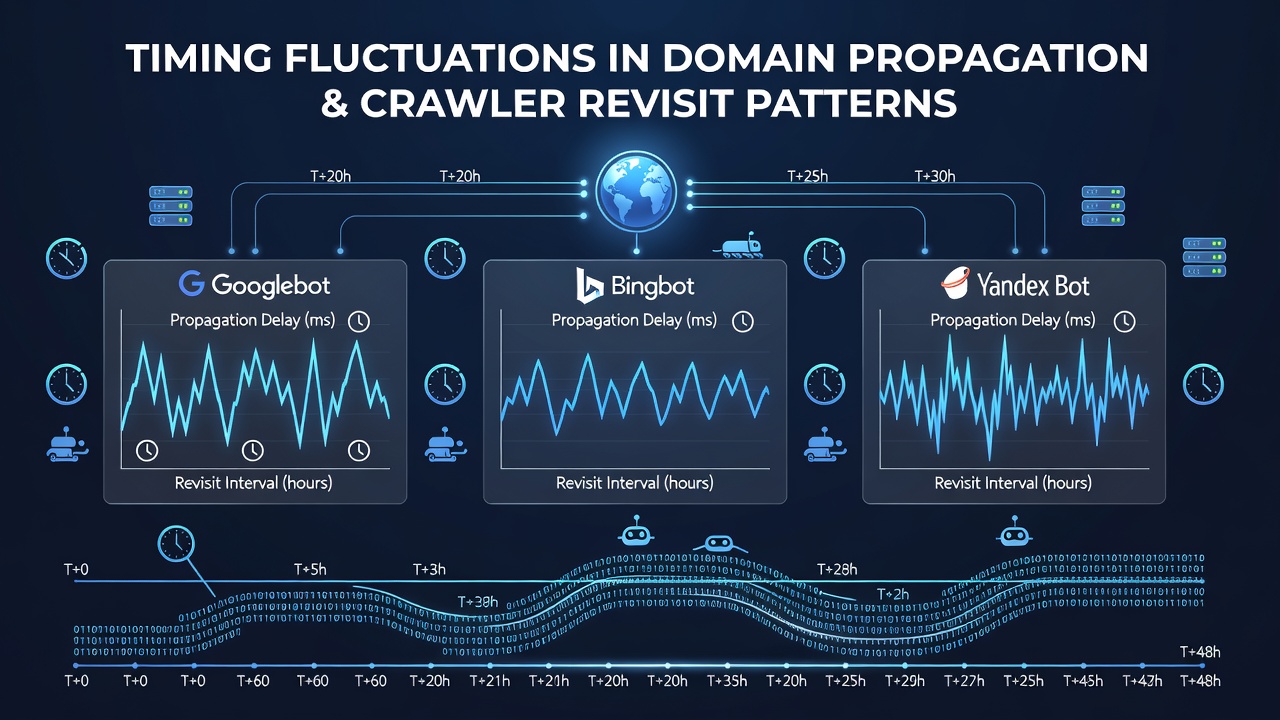
Domain propagation involves the time required for DNS changes to spread across global servers after updates to nameservers, IP addresses, or records, and timing fluctuations during this process create variable delays that influence how search engine crawlers schedule their revisits. Researchers at institutions tracking web infrastructure note that these fluctuations stem from factors like TTL settings, recursive resolver caches, and regional network conditions, which cause crawlers from engines such as Google, Bing, and others to encounter inconsistent site availability during propagation windows.
Understanding Domain Propagation Mechanics
Propagation begins when an administrator modifies DNS records, after which authoritative servers update while caching layers at ISPs and recursive resolvers retain older data for periods dictated by TTL values ranging from minutes to hours. Experts observe that shorter TTLs accelerate spread but increase query loads, whereas longer ones extend the window where some users and automated systems access outdated endpoints. Data from network monitoring reports show that complete propagation often spans four to forty-eight hours depending on record type and geographic distribution, with IPv6 and AAAA records sometimes lagging behind A records due to differing resolver priorities.
Crawler Revisit Dynamics and Timing Sensitivity
Search engine crawlers operate on revisit patterns determined by algorithms that factor in site change frequency, authority signals, and historical crawl data, yet these patterns shift when domain propagation introduces temporary inaccessibility or routing inconsistencies. According to analyses from the Internet Systems Consortium, crawlers may interpret propagation-related errors as site instability, prompting adjustments that either accelerate or delay subsequent visits. For instance, a crawler hitting a stale IP during the transition phase receives connection timeouts or redirects that alter its perception of freshness, leading major engines to recalibrate their schedules based on aggregated signals from multiple resolver paths.
Variations Across Major Search Engines
Google's crawler infrastructure, known for its distributed nature and rapid adaptation, tends to detect propagation fluctuations through cross-referencing multiple data centers, which can result in staggered revisits where some nodes update faster than others. In contrast, Bing's approach, as documented in technical overviews from Microsoft documentation, incorporates explicit handling for DNS cache expiration that aligns revisit attempts more closely with expected propagation completion times. Observers note that engines like Baidu and Yandex exhibit different sensitivities tied to their regional focus, where local resolver behaviors in Asia and Europe amplify or mitigate timing variances respectively. Research from Australian academic networks indicates that these differences manifest in crawl logs as periodic spikes in error rates during high-fluctuation periods, affecting indexation velocity for newly migrated domains.
Empirical Patterns Observed in 2026
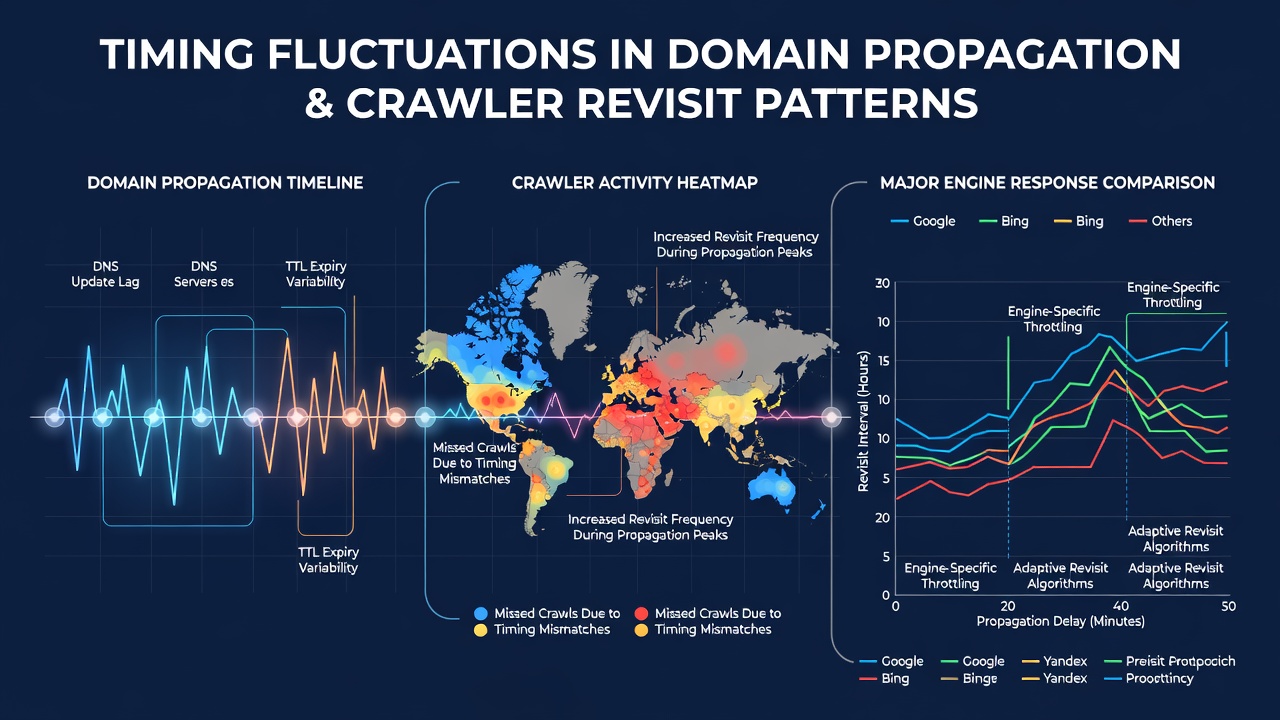
Monitoring data collected through September 2026 reveals increased instances of revisit pattern disruptions coinciding with widespread adoption of shorter TTL configurations following infrastructure updates at several large hosting providers. Studies conducted by Canadian research groups highlight that domains experiencing propagation delays exceeding twelve hours saw crawler intervals extend by up to thirty percent in the following week, while those with stable transitions maintained baseline frequencies. Engine-specific logs analyzed by European university teams further demonstrate that combined effects from both propagation timing and concurrent algorithm adjustments can compound these shifts, producing measurable differences in how quickly content changes appear in results.
Technical Factors Amplifying Effects
Additional variables such as anycast routing configurations and CDN edge cache synchronization interact with propagation timing to create layered inconsistencies that crawlers must navigate. Those who've examined extensive datasets find that when a domain's nameserver change propagates unevenly, crawlers relying on specific resolver clusters encounter repeated redirects or content mismatches, which feed into their revisit decision models. Industry reports from organizations tracking global DNS health confirm that these interactions often produce non-linear effects, where minor timing variances trigger disproportionate adjustments in crawl budgets for affected sites.
Conclusion
Timing fluctuations inherent to domain propagation directly shape crawler revisit patterns by introducing periods of uncertainty that engines resolve through adaptive scheduling based on observed responses. Data collected across multiple regions and engine types illustrates consistent patterns where propagation duration correlates with temporary shifts in crawl frequency, while variations in resolver behavior and cache policies account for differences among major players. Continued observation of these dynamics supports better understanding of web infrastructure interdependencies as they evolve.